

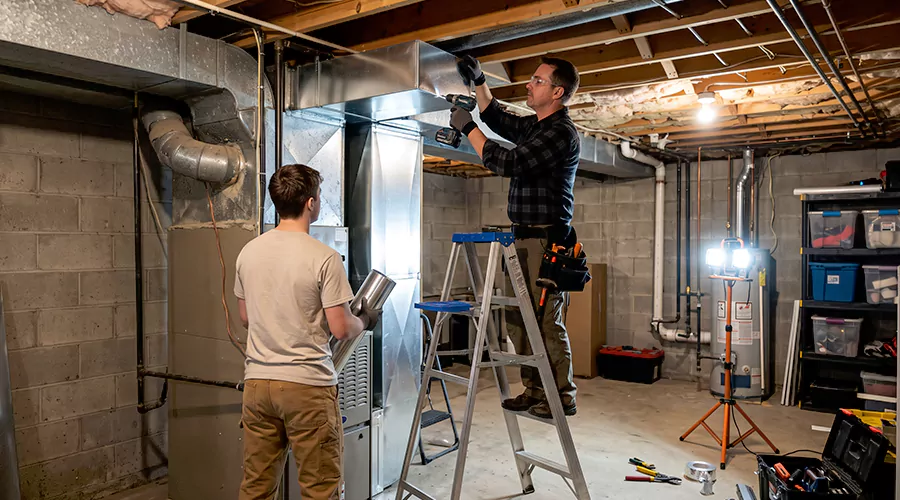
Replacing ductwork under a house typically costs $2,600 to $7,300 in the United States in 2026, with an average of approximately $4,800 according to Angi's crawlspace replacement estimates. Our air duct replacement team handles these projects from inspection through final testing. The final price depends on the amount of ductwork, material selection, crawlspace accessibility, and whether moisture or other damage must be corrected before installation.
Under-house ductwork carries heated and cooled air between HVAC equipment and the rooms above. These ducts are commonly installed in crawlspaces, where limited clearance and exposure to moisture can make maintenance difficult. Many systems use a combination of rigid metal main trunks and insulated flexible branches connected to floor registers.
Replacement becomes necessary when the ducts are severely damaged, deteriorated, or unable to provide the required airflow. Flexible ducts may become crushed or torn, while metal passages can develop rust after repeated moisture exposure. Duct insulation can also become unsuitable when it remains wet or contaminated.
Unlike an accessible basement installation, a crawlspace replacement may require technicians to work beneath floor framing with restricted movement. Labor and site preparation can therefore account for a significant portion of the total cost. Understanding these expenses helps homeowners prepare a realistic budget and compare replacement quotes.
What Is the Average Cost to Replace Ductwork Under a House in 2026?
Angi's July 2026 cost guide places crawlspace ductwork replacement between $2,600 and $7,300, with an average of approximately $4,800. HomeGuide reports a similar range of $3,000 to $7,300 for replacing ducts in a crawlspace. These estimates generally describe residential projects involving multiple duct sections rather than one minor repair.
The final cost depends on the actual replacement scope. A home needing only one damaged flexible branch replaced may cost considerably less. A larger property requiring new main trunks and return passages may exceed the published average, especially when access is restricted.
| Under-House Ductwork Project | Estimated U.S. Cost |
|---|---|
| Crawlspace replacement, Angi 2026 | $2,600–$7,300 |
| Average reported by Angi | Approximately $4,800 |
| Crawlspace replacement, HomeGuide | $3,000–$7,300 |
| Crawlspace duct repairs, Angi 2026 | $450–$2,400 |
| General individual duct run replacement | $270–$500 for straightforward installations |
| Extensive replacement with major site complications | Site-specific quote |
These figures represent different project categories and should not be added together. A replacement quote may already include removing damaged ducts and installing the new connections. Repair costs apply when the existing material can remain in service.
A homeowner should confirm whether a quote covers the complete supply and return network or only selected branches. This distinction can explain substantial price differences between contractors.
How Much Does Crawlspace Duct Replacement Cost per Linear Foot?
Angi's 2026 crawlspace cost guide uses approximately $30 to $60 per linear foot as an installation labor benchmark for difficult under-house work. However, the final project price cannot be calculated from length alone because materials, fittings, minimum charges, and other work may be priced differently. A contractor should clarify what its own per-foot rate includes.
The size of the duct is also important. A large rectangular metal trunk may require more material and fabrication than a narrow flexible branch of the same length. Each connection and support arrangement adds work beyond simply installing a continuous duct.
The following table illustrates the $30 to $60 per-foot benchmark.
| Ductwork Length | Example at $30 per Foot | Example at $60 per Foot |
|---|---|---|
| 20 linear feet | $600 | $1,200 |
| 40 linear feet | $1,200 | $2,400 |
| 60 linear feet | $1,800 | $3,600 |
| 80 linear feet | $2,400 | $4,800 |
| 100 linear feet | $3,000 | $6,000 |
| 120 linear feet | $3,600 | $7,200 |
These calculations illustrate a published labor or installation pricing benchmark and are not complete installed-project estimates. The project may also require duct materials, mechanical fittings, insulation, removal, disposal, and testing. A short replacement can cost more per foot when the contractor applies a minimum service fee.
Ask for one written total covering the completed work. This is more useful than relying solely on an advertised per-foot figure.
How Much Does It Cost to Replace One Duct Under a House?
Replacing one straightforward residential duct run may cost approximately $270 to $500 under general replacement estimates. However, this range assumes relatively ordinary access and does not necessarily represent a difficult crawlspace job. Restricted clearance and damaged connection fittings can increase the actual quote.
For example, a flexible branch disconnected from a sound metal trunk might require only reconnection when the material remains intact. A permanently crushed branch would need new material and proper support. Replacing the entire main duct system would be unnecessary if the other passages remain suitable.
A contractor should determine whether the problem involves the flexible liner or only its connection. This distinction can substantially affect the cost. Localized repairs are often less expensive than replacement when they can restore a durable and airtight connection.
How Much Does Whole-House Crawlspace Duct Replacement Cost?
A whole-house crawlspace replacement involves more than changing one or two supply branches. The project may include new main trunks, supply ducts, return passages, junction boxes, and register connections. The amount of work depends on how the home's HVAC system distributes air.
A larger house generally has more ductwork, but floor area alone does not determine the cost. Some single-story homes contain long, accessible main trunks, while others use complicated branch layouts beneath several rooms. A home with multiple heating and cooling systems may also require separate duct networks.
The $2,600 to $7,300 published range is useful for preliminary budgeting. However, a contractor should inspect the complete system before estimating a whole-house replacement. The final quote should identify the number of runs and total materials included.
When the project also requires correcting major water damage or a new crawlspace moisture-control system, the overall property improvement can cost substantially more than the duct replacement alone.
What Factors Affect the Cost of Replacing Ductwork Under a House?
Crawlspace replacement prices reflect both the HVAC installation and the conditions beneath the building. Restricted access can slow removal and increase the time needed to install proper supports. Moisture and material damage may also create work outside the ordinary replacement scope.
Crawlspace Height and Accessibility
Working clearance has a direct effect on installation difficulty. A crawlspace with comfortable access and a suitable entrance may allow technicians to handle ducts relatively efficiently. A very low space can make it harder to remove long sections and position new material.
Duct replacement should not proceed through unsafe conditions. Standing water near electrical components and unstable access areas require proper attention before workers enter. The cost of improving access may be separate from the duct installation.
Duct Length and Number of Branches
More ductwork generally means additional materials and installation labor. Each branch must connect to an approved fitting and remain properly supported. A project with several short branches can still require substantial work because of the number of connections.
Main trunk replacement may also require disconnecting multiple existing branches. The installer must then reconnect suitable sections or replace damaged ones. This is more involved than changing a single independent run.
Flexible Versus Metal Ductwork
Flexible ducts are commonly used for suitable branch runs because they can follow gentle curves around floor framing. Rigid metal is often used for main trunks that serve several rooms. The two materials require different connection and support methods.
Flexible material is generally less expensive to purchase, but it can become restrictive when installed with sharp bends or inadequate supports. Metal may require more fabrication and fitting labor. Material selection should follow the airflow requirements and crawlspace conditions.
Insulation Requirements
Ducts in unconditioned crawlspaces generally need appropriate insulation to reduce heat transfer. The required rating depends on the location and applicable energy code. Pre-insulated flexible ducts include thermal insulation and a protective outer jacket, while metal ducts may need separate insulation.
Damaged or incomplete insulation can contribute to energy loss and moisture problems. The replacement quote should therefore identify the insulation specifications. A low price that excludes proper insulation may not provide an equivalent installation.
Condition of Existing Connections
Old register boots and junction boxes may be loose or damaged. Installing a new duct onto an unstable fitting can create another leak or disconnection. These components should be inspected before replacement begins.
A contractor may need to repair or replace damaged collars and transitions. This increases labor but supports a durable installation. The quote should identify whether connection components are included.
Local Labor Costs
Labor rates vary between cities and contractors. A company may charge by project or develop a price using estimated hours and materials. The amount of specialized access required can also affect labor.
A higher quote may include additional work such as airflow testing or replacing damaged fittings. Comparing only the total price can therefore be misleading. Written estimates should describe the same scope before homeowners decide which offer provides better value.
How Does Crawlspace Moisture Affect Replacement Cost?
Moisture is one of the most important conditions to investigate before replacing ducts beneath a house. Water from plumbing leaks or drainage problems can damage insulation and corrode metal. Humid conditions may also contribute to condensation on poorly protected duct surfaces.
If a duct has deteriorated because of recurring water exposure, the source should be corrected first. Installing new material in the same conditions may lead to another failure. The replacement budget may therefore need to include separate moisture-control repairs.
A crawlspace may require minor drainage work or a more extensive moisture-control project. The appropriate solution depends on its construction, climate, and existing water conditions. Full encapsulation is not automatically required for every duct replacement.
Cost of Crawlspace Encapsulation
Angi's 2026 estimate places full crawlspace encapsulation commonly between $5,000 and $15,000, depending on the size and condition of the space. This is a separate building improvement project rather than a standard duct replacement charge. It may include work intended to limit moisture entering from the ground or surrounding environment.
Encapsulation may be appropriate when the building's moisture-control design calls for it. However, sealing a crawlspace without evaluating drainage and ventilation conditions can create additional problems. A qualified professional should determine the appropriate moisture strategy.
Homeowners should not automatically add the encapsulation price to every duct quote. It applies only when that work is separately justified and approved.
What Additional Costs Can Increase Under-House Duct Replacement?
Duct replacement can reveal conditions that require specialist work. Pest contamination and damaged insulation are examples. These should be identified before the contractor proceeds with ordinary replacement.
| Additional Work | Why It May Be Needed |
|---|---|
| Drainage or plumbing repair | Correct water reaching the ducts |
| Crawlspace encapsulation | Address a separate moisture-control need |
| Pest remediation | Remove infestation and correct access points |
| Mold remediation | Address documented contamination |
| Asbestos assessment or abatement | Manage suspected hazardous older materials |
| New register boots | Replace unsuitable connections |
| Duct insulation work | Meet thermal and moisture requirements |
| Airflow design calculations | Correct inadequate duct sizing |
| Leakage and airflow testing | Verify the replacement system |
| Permit and inspection fees | Meet local building requirements |
These items are not automatically necessary. A dry, accessible crawlspace containing one damaged branch may need none of the specialized remediation work. An extensive project with multiple problems can require several separate estimates.
Ask the contractor to identify the reason for each additional charge. Work involving mold, pests, or suspected asbestos should be based on documented conditions rather than assumptions.
Is It Cheaper to Repair Ductwork Under a House?
Repair can be considerably less expensive when the duct material remains sound. Angi's September 2026 crawlspace repair guide places many projects between $450 and $2,400, with an average around $900. The total depends on the nature and accessibility of the problem.
A detached fitting may require mechanical reconnection and sealing rather than new ductwork. Damaged supports can also sometimes be replaced without discarding the air passage. These repairs may restore performance at a lower cost.
Replacement is more appropriate when the material has become severely damaged. A collapsed flexible liner cannot be repaired by adding sealant, and extensively rusted metal may no longer hold a durable patch.
| Duct Condition | Likely Solution |
|---|---|
| Loose but sound connection | Reattach and seal |
| Small leak in sound metal | Suitable repair |
| Broken support with intact duct | Restore support |
| Minor exterior jacket damage | Repair if insulation remains suitable |
| Permanently crushed flexible duct | Replace affected section |
| Extensively corroded metal | Replace affected section |
| Wet or moldy fiberglass duct material | Replace affected material |
| Widespread system deterioration | Evaluate broader replacement |
A contractor should explain why each section needs replacement. Repairing sound material can reduce cost and preserve useful components.
Does Duct Material Affect the Final Cost?
Yes. Different materials have different purchase prices and installation requirements. The contractor should also consider how each material performs beneath the home.
Rigid metal provides a stable passage and may resist ordinary physical contact better than flexible ductwork. However, it can corrode when exposed to persistent moisture. Its installation may also require custom fittings and support hangers.
Flexible ducts are convenient for certain branches but must remain properly extended and supported. The inner liner can become damaged when the material is crushed. An inexpensive flexible duct installed incorrectly may create costly airflow problems.
The correct choice should follow the HVAC design and environmental conditions. A combination of rigid metal trunks and flexible branches may be appropriate for many homes.
How Much Does Duct Removal and Disposal Cost?
Removing old ductwork may be included in a complete replacement quote. However, the amount of labor depends on how easily technicians can disconnect and remove the material. Large metal trunks can be difficult to maneuver through small crawlspace entrances.
Damaged fiberglass insulation may also require careful containment during removal. If suspected asbestos-containing material is present, the work requires qualified assessment and possibly specialized abatement. These services should not be included casually under ordinary demolition.
The contractor should state whether disposal is included. A material installation price that excludes removal may not represent the complete cost of the project.
Does Replacing Ductwork Under a House Improve Energy Efficiency?
Replacement can improve energy performance when the original ductwork has major leaks or insufficient insulation. ENERGY STAR estimates that typical homes can lose approximately 20% to 30% of air moving through duct systems because of leaks and poor connections. Correcting substantial defects can reduce unwanted air losses.
However, this figure does not mean a homeowner's utility bill will fall by the same percentage. The improvement depends on how much leakage was present and whether the affected ducts lie outside conditioned space. Equipment condition and the home's heating and cooling needs also influence energy use.
A sound duct system may only need sealing and insulation improvements rather than complete replacement. The contractor should determine which approach addresses the actual defects.
What Is Included in Professional Under-House Duct Replacement?
A proper replacement project involves more than installing new tubing beneath the floor. The contractor should inspect the existing network and confirm suitable duct sizes before removal. The new ducts must then be securely connected, supported, and insulated.
Typical work includes:
- Inspecting the crawlspace and identifying hazards.
- Documenting damaged supply and return ducts.
- Confirming the replacement design and sizes.
- Checking moisture and pest conditions.
- Removing unsuitable existing materials.
- Preparing sound connection fittings.
- Installing new rigid or flexible ducts.
- Mechanically securing and sealing connections.
- Restoring insulation and vapor barriers.
- Installing approved supports and hangers.
- Testing for leakage and airflow.
- Removing debris and documenting the work.
The U.S. Department of Energy recommends properly supporting flexible ducts using wide straps or saddles. Typical horizontal support spacing should be no greater than four feet, with limited sag. The manufacturer's instructions and applicable code remain important.
The finished system should not rest in standing water or contain sharp restrictions. Appropriate testing helps confirm that the new ducts perform as intended.
How Long Does Replacing Ductwork Under a House Take?
A small replacement involving one accessible branch may take part of a working day. Larger crawlspace replacement projects can take one to three days or longer, depending on system size and working clearance. Additional moisture remediation or specialized material handling can extend the overall schedule.
The contractor should account for the time needed to remove old material, install supports, and seal the new connections. Leakage and airflow testing also require time. Skipping these steps to shorten the appointment can leave problems hidden beneath the house.
Ask how long heating or cooling will be unavailable. Planning the work during moderate weather can reduce disruption when the system needs to remain off.
How Can You Save Money on Under-House Duct Replacement?
The most useful way to reduce cost is to identify exactly which ducts require replacement. A damaged branch does not automatically mean that all main trunks and return passages need to be rebuilt. Repairs may be appropriate for sound sections with localized leakage.
Request at least two detailed quotes based on the same materials and work. Compare insulation ratings, mechanical connections, supports, and testing. A low estimate may exclude necessary components, while a higher price may include site preparation that another contractor has not considered.
Correct active moisture problems before new ducts are installed. Replacing materials repeatedly because the original water source remains unresolved creates avoidable expense. Coordinating the necessary repairs helps protect the investment.
What Should You Ask Before Hiring a Contractor?
The contractor should inspect the crawlspace before giving a final replacement quote. Photographs and measurements can help document the existing condition. A reliable proposal should also identify whether the project involves supply ducts, returns, or both.
Ask these questions:
- How much ductwork will be replaced?
- What is the approximate total linear footage?
- Which existing sections can remain?
- What duct material and insulation rating will be used?
- Are the new duct sizes based on airflow calculations?
- Are removal and disposal included?
- Will new supports and connection fittings be installed?
- Are all supply and return joints being sealed?
- Is moisture repair included or separate?
- Are permits and inspections required?
- Will leakage and airflow testing be completed?
- What warranty applies to the installation?
An itemized quote makes it easier to evaluate differences between contractors. It also helps prevent unexpected charges after the old ductwork has been removed.
Is Replacing Ductwork Under a House Worth the Cost?
Replacement can be worthwhile when the existing ducts are severely damaged or cannot provide adequate airflow. Correcting collapsed branches and major leaks may improve comfort and reduce unwanted heating and cooling losses. The benefits depend on the condition of the original system.
However, full replacement is not always the most economical response. A sound metal trunk with a loose connection may only need repair. The appropriate investment should follow an inspection rather than an assumption that all crawlspace ductwork is deteriorating.
Conclusion
Replacing ductwork under a house commonly costs $2,600 to $7,300 in 2026, with an average around $4,800 in Angi's published estimates. The final price depends on duct length, materials, access, and any moisture or contamination problems requiring separate work. Localized repairs may be less expensive when the duct materials remain sound. Proper support, insulation, sealing, and testing are important parts of a completed replacement. Before approving the project, request a crawlspace inspection and an itemized quote showing what needs to be replaced.